Freight Class & NMFC Guide
Freight Class Matters More Than Most Shippers Realize
Freight class, NMFC item numbers, density, handling, stowability, and liability can all affect LTL pricing. Amark helps customers review shipment details so quotes and invoices are based on better information.
What Is NMFC?
The National Motor Freight Classification system helps identify and classify commodities moving by LTL freight. NMFC information can affect how a shipment is rated, priced, handled, and reviewed by carriers.
What Is an NMFC Item Number?
An NMFC item number identifies a commodity or commodity group. When available, the correct NMFC item can help support accurate freight classification and reduce confusion during rating or invoice review.
What Is Freight Class?
Freight class is used in LTL shipping to help determine pricing. Class can be affected by shipment density, handling, stowability, and liability.
Why Freight Class Accuracy Matters
Incorrect freight class can lead to:
- Quote changes
- Reclasses
- Additional carrier charges
- Billing disputes
- Delayed invoice approval
- Customer confusion
- Weaker documentation if a billing issue arises
What Information Helps Determine Class?
Amark may ask for:
- Commodity description
- NMFC item number, when available
- Length, width, and height
- Total weight
- Packaging type
- Stackability
- Handling requirements
- Value or liability concerns
- Photos or product details when needed
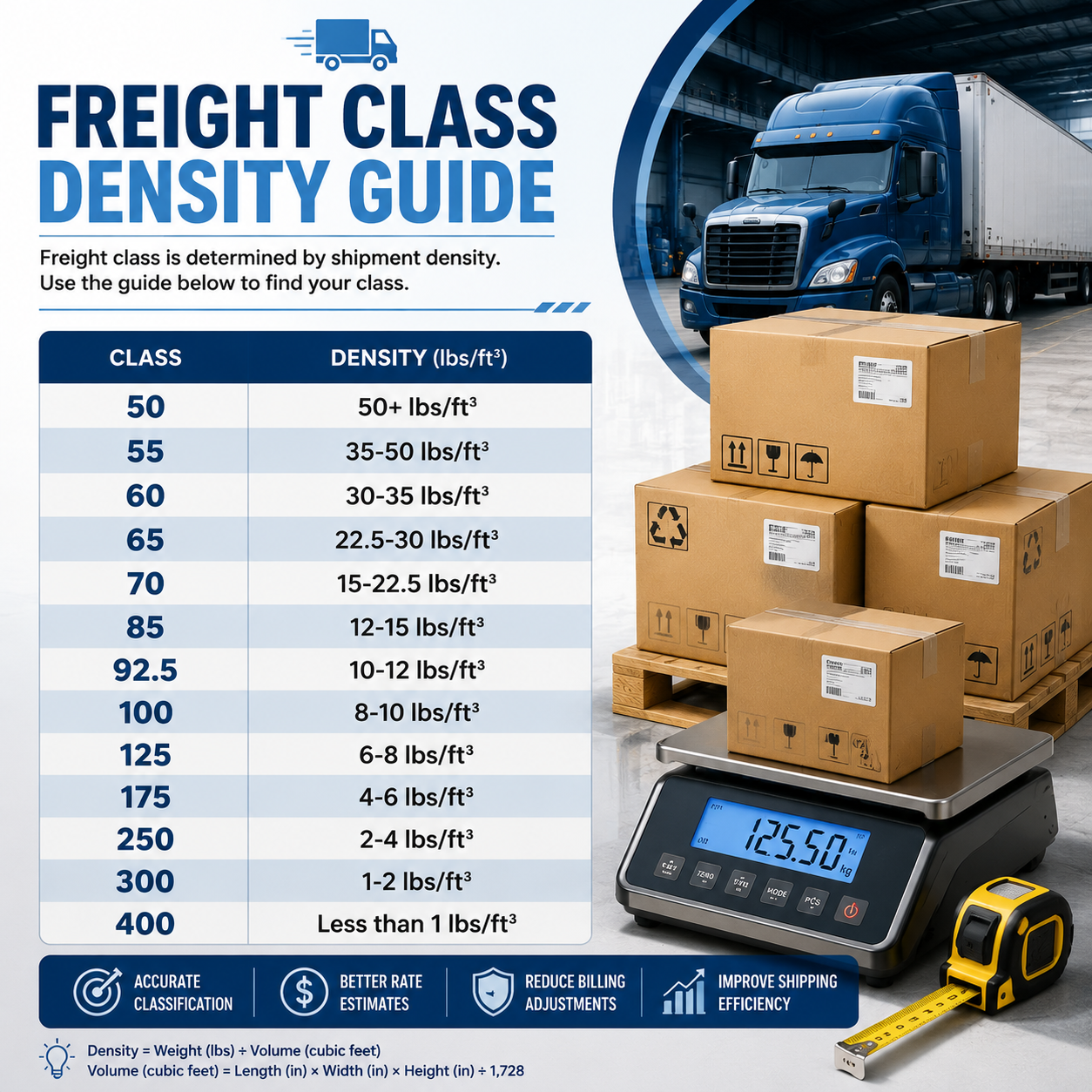
Freight Class Calculator
Enter shipment dimensions and weight to calculate density and estimated freight class.
A calculator can help estimate density, but it should not be treated as final classification. Final class may depend on NMFC language, commodity description, packaging, carrier interpretation, and applicable rules.
Unsure About Freight Class?
Send Amark the shipment details and our team can help review the information needed for a more accurate LTL quote.